
|
Listening to the people of Greenland

Jess Svane |
«…One
of the greatest problems in Greenland of today is the
communication between the eight big cities, and the 42
villages distributed on the coast of Greenland. For
including/understanding well, it should be known that our
littoral extends on 44.000 kilometers, which is colossal.
When well even, we all are Greenlandic, we have different
languages, different cultures, and different waitings…»
more ... |
|
|
|

Paul Jensen |
«…The
summer which is completed was one of driest than we never
knew. For the first time, we had prohibitions to make fire
in the district of Ilulissat…
… I could
not any more nourish them my dogs. Many people downtown were
in the same case as me. We helped each other of course
mutually, but the demand in seals and fish was too
important. The fisheries were to us at this moment of a
great utility. And when two years ago of that, she moved to
go to settle on another village, of the six thousand dogs
which the city counted, the half had to be shot down…»
more ... |
|
|
|

Lars Fleischer |
«…with
forty three inhabitants, we are one of the smallest villages
in this part of the country. Our long term survival depends
on our ability to reverse this trend. Our biggest challenge
is economic. We must be able to maintain and create jobs.
All ideas on this subject are welcome. In this respect, we
intend to develop our fish processing plant, by introducing
an area to taste our products. These are very much in
demand, and the tourists will be able to get to know them,
and to buy them on the spot. This should improve our sales,
while at the same time improving the appeal of our town to
tourists…»
more ... |
|
|
|

Adolf Eugenius
Jensen |
«Modern
life has unfortunately resulted in a loss of our traditions.
Children used to grow up with their parents and
grandparents, and knowledge was passed on in this way. That
is no longer the case, and playgroups and nurseries have
replaced the elders. Everyone’s level of comfort has
improved, to the detriment of our patrimony and our
traditions.
From a
general point of view, I prefer the modern way of life, even
if in respect of the education of the young people, there
are things which can be criticised»
more ... |
|
|
|

Jacob Nielsen
Storch |
«No
one knows what the future holds for us; we can only imagine
that it will be different. There will certainly be new
insects, new fish, and one can even imagine a Greenland
without ice and without ice floes. When that happens, we
will need to adapt. Man is made for that, whether he is a
Greenlander or another nationality.Unlike
other countries, we don’t have a purely economic view of our
environment. We don’t hunt or fish more that we consume
ourselves. We have a desire to preserve the species in the
oceans and the animals which surround us for future
generations. We don’t need laws and regulations to tell is
how to behave – we have had this inner knowledge for
thousands of years.»
more ... |
|
|
|

Ilannguaq
Egede |
«…Last
winter, with the ice floes in good condition, I started to
train a team of dogs. Just like me, my dogs were beginners.
It’s not easy to control a team of dogs. I was the laughing
stock of the older people. With more experience, I hope to
make progress next winter, and eventually increase my income
by fishing on the ice, and why not, later, with tourists. I
only hope that the ice will be there…»
more ... |
|
|
|

Karl Kristian
Kruse |
«…
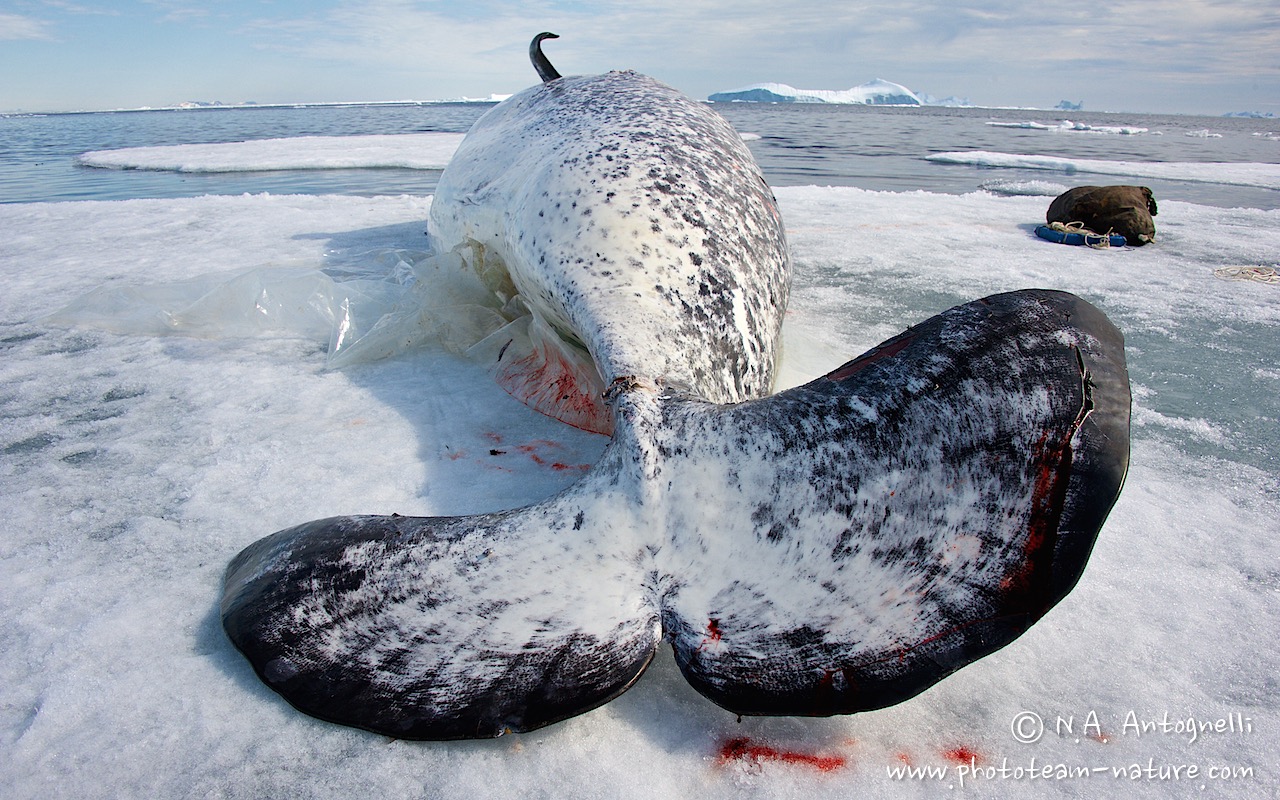
Many whales pass by our coast. They are in fact increasing
in numbers, except for the belugas, which have disappeared.
We don’t know the reason for this, but it is clear that
something has changed, and that their habits have been
modified
…»
more ... |
|
|
|

Polas Lyberth |
«...This
winter was exceptional, with conditions which we haven’t had
for a very long time. In some places, the ice was one meter
thick. To give you an example, our taxis could go on the ice
as far as the village of Saatut, twenty three kilometres
away…»
more ... |
|
|
|
.JPG)
Kalissi
Kristen Trolle |
«…
At the
beginning, it was exceptional, but nowadays it tends to
reappear more and more frequently. When it comes, our house
is shaken from top to bottom by violent gusts of wind. In
the past, I was never worried about our house……
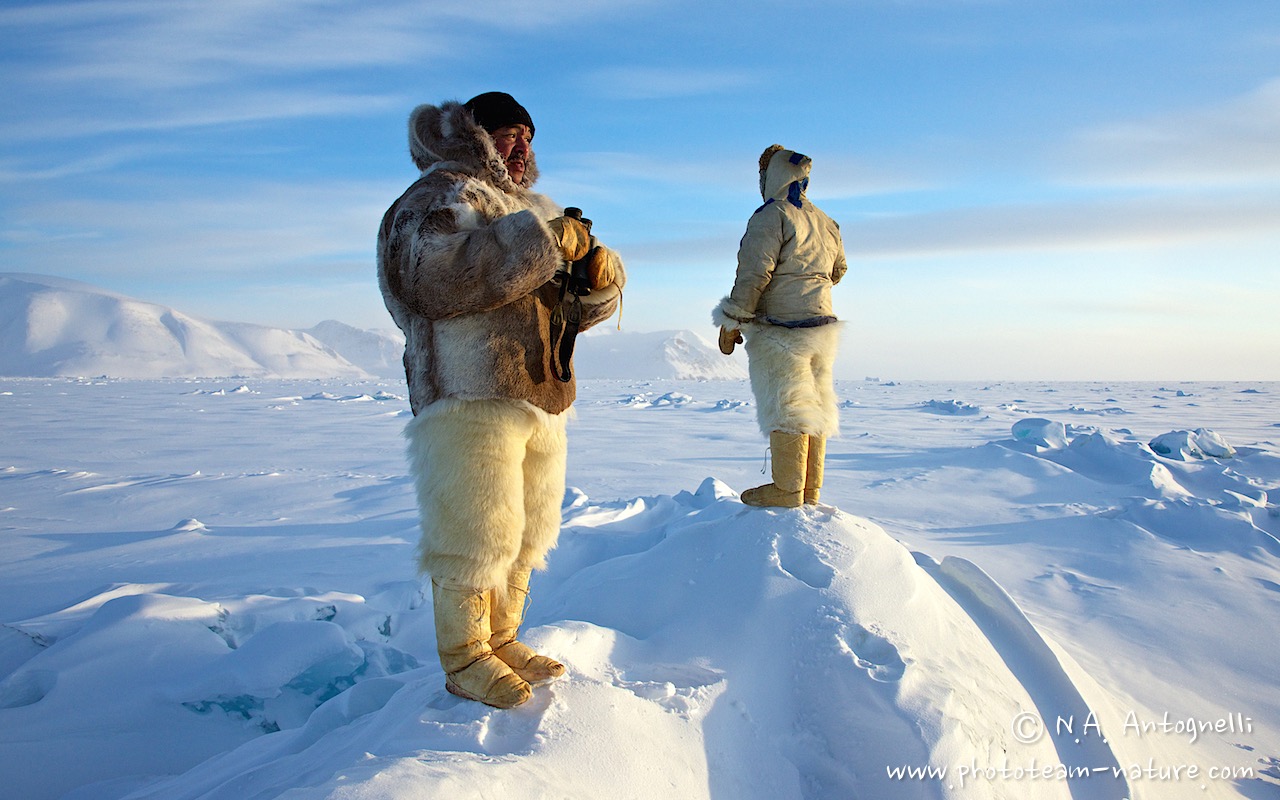
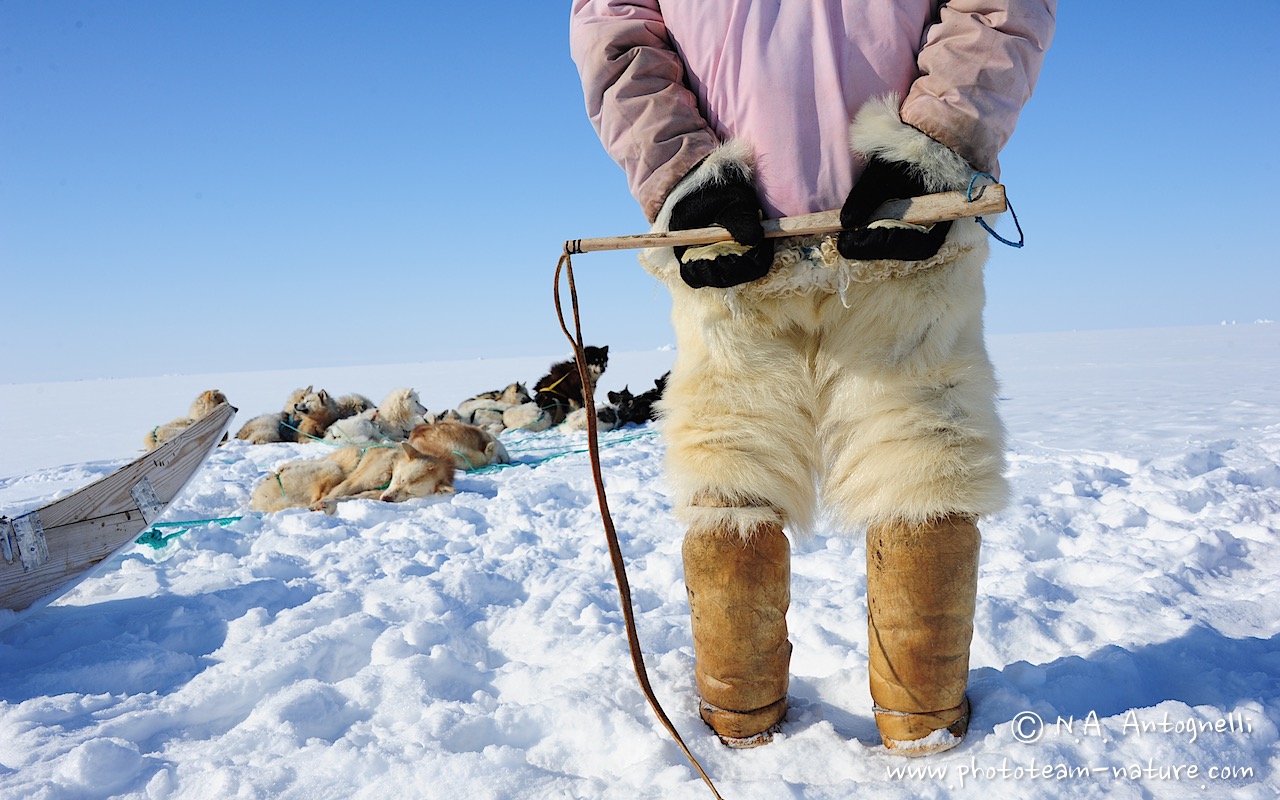
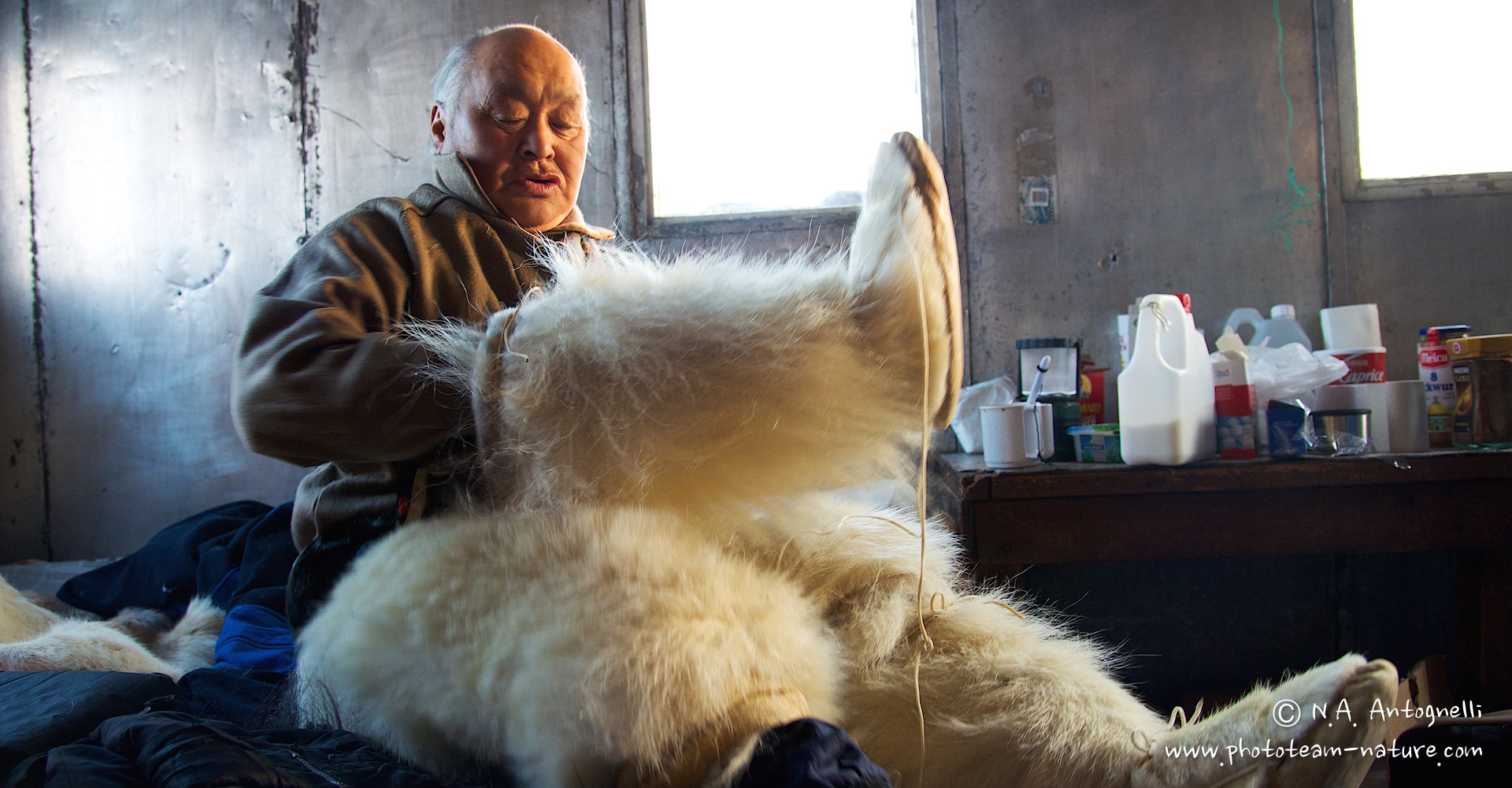
My trousers are made of bearskin, and my jacket from the
hide of a dog. But many traditions are being lost – our
children are no longer able to make these clothes. The young
girls can’t sew. Our boots come from Canada. I’ve drawn the
attention of our community to the situation. We could put in
place workshops to safeguard our knowledge, but that hardly
seems to interest them
…»
more ... |
|
|
|

Edvard
Samuelsen |
«…
because this warm wind removes the snow
from the pack ice. The dogs can’t run on the ice, nor can
they relieve their thirst with the snow, as they usually do…
… My main
concern is to see the snow disappear completely. Travelling
on the ice would be impossible, and we’d be obliged to kill
the dogs who were no longer of any use
…»
more ... |
|
|
|

Aqqaluk
Karlsen |
«…In
Sondre Upernavik, as in many villages, we don’t have
possibilities for education. This forces us to send our
children from the age of 13 or 14 years old to the large
towns such as Upernavik to continue their studies. Sondre
Upernavik has a total of eighty children, and our school can
only take forty. Half of them are obliged to go and study
elsewhere. In order to stay with them, the parents leave
their village and move with them to the city…»
more ... |
|
|
|

Martin
Rasmussen |
«…The
types of fish have changed. You find a lot of catfish, and
there are also many more cod in winter.
From an economic point of view, we work
very hard, but our purchasing power doesn’t keep up. Taxes
have gone up considerably, which affect us in our daily
life.
The European regulations
cause us a lot of hardship, as we can no longer sell seal
skins. Some months they are not sold at all. It’s becoming
more and more difficult to live in the small villages…»
more ... |
|
|
|

Samuel Knudsen |
«…The
seal used to be precious and essential – we used it to feed
ourselves and also to keep warm. Nowadays, it’s simply one
source of food among many. People are no longer looking for
seals – they’re looking for work…»
more ... |
|
|
|

Jens Otto
Rasmussen |
«…
The village
cannot provide employment for everybody – the ones without a
job are obliged to fend for themselves and live from fishing
and hunting. For this reason, more and more people leave the
village and move to the large towns where there are more
opportunities to find a job. We used to have two hundred and
twenty inhabitants, compared with a hundred and seventy
today.The
economic situation makes things worse – the fisherman is
paid for his fish nine kroner a kilo, a price which hasn’t
changed in the last fifteen years, while the cost of living
has not stopped rising
…»
more ... |
|
|
|
.JPG)
Bent Petersen |
«…From
a political point of view, things are going a bit too fast
for my liking. The government will be tempted by the
development of petroleum and mineral resources. I would
prefer investments in renewable energy. The damage caused by
these proposed developments could cause a lot of harm to our
country, which is already seriously affected by climatic
changes…»
more ... |
|
|
|

Lars Petersen |
«…We
are increasingly obliged to use our boats for hunting during
winter. Summer arrives late, the month of June is colder. In
May, the most critical month of the year, I was only able to
go hunting on two occasions: the ice isn’t thick enough to
go on it with the dogs, but it’s too thick for our boats to
pass. Between this problem and the weather conditions, the
opportunities for hunting are really limited…»
more ... |
|
|
|

Finn Pedersen |
«…Until
1993, snowmobiles were forbidden on the pack-ice, and people
only travelled using teams of dogs. There were thus more
dogs than people in Upernavik. I myself had dogs, but as for
many other people, the last few years I could no longer go
with them on the ice. They served no purpose for me. I had
to feed them to do nothing…»
more ... |
|
|
|

Emil Bahri |
«…as
far as I’m concerned, education is an essential sector,
which requires a real plan. Many children stop their studies
at the age of fourteen or fifteen, as soon as education is
no longer compulsory. Those who continue are obliged to go
to schools in the big cities of the south. As a result, they
are far from their families and their environment. They find
themselves faced with Danish professors, who for the most
part don’t speak their language…»
more ... |
|
|
|
 Henriette
Rasmussen |
« …In the past, the Inuits knew how to
interpret every meteorological change, which allowed them to
foresee the weather for the coming days. Nowadays, the
weather changes more quickly...»
more ... |
| |
|
|