

|
Karl Kirstian KRUSE -
Mayor of the commune, Hunter and fisherman
Niaqornat - Latitude 70
47 NR - Longitude 053 39 W
65 inhabitants
Remarks collected in
July 2009
Niaqornat has always been a community
focused on fishing and hunting. Until recently, fishing was
our main source of revenue.
Royal Greenland, the company which
managed our fish-processing plant, was of the opinion that,
in spite of the quality of the catch, our installation was
not economical, mainly due to our far away location. The
plant therefore closed, and that constitutes a major
handicap. Our fishermen are obliged to deliver their fish to
the neighbouring village. Today we are looking for a private
solution, but so far nothing has turned up.
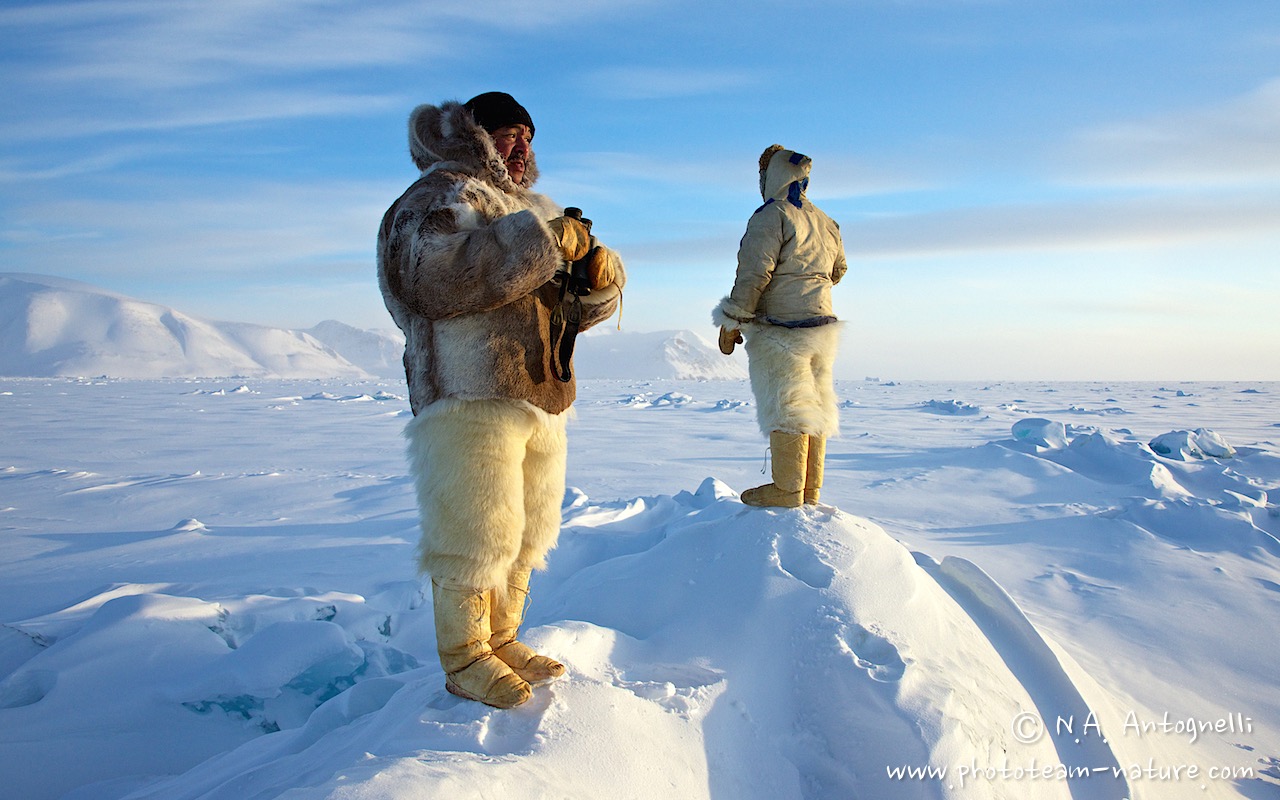
In 2003, we had a good winter, with ice
of a satisfactory thickness. The ice was there from January
until the end of May.
That was followed until 2008 by a
succession of very bad years, where the sea did not freeze
until March. When it finally froze, the ice was not very
thick, and it was uneven and dangerous in places. Underneath
the ice, stronger currents than before gave rise to open
areas which did not freeze at all. We had to wait until this
year, 2009, to have a real winter with conditions a lot
better than in 2003. The conditions are not stable, and no
one can say how next winter will be. From an economic point
of view, in the last few years Europe has greatly increased
the regulations relating to the importation of the animals
which we hunt, even when certain species are not under
threat. Taking this together with the bad weather
conditions, the recent years have been particularly
difficult for everybody. Our two main activities are
threatened, and if things don’t change, some of the
inhabitants will be obliged to leave the village.
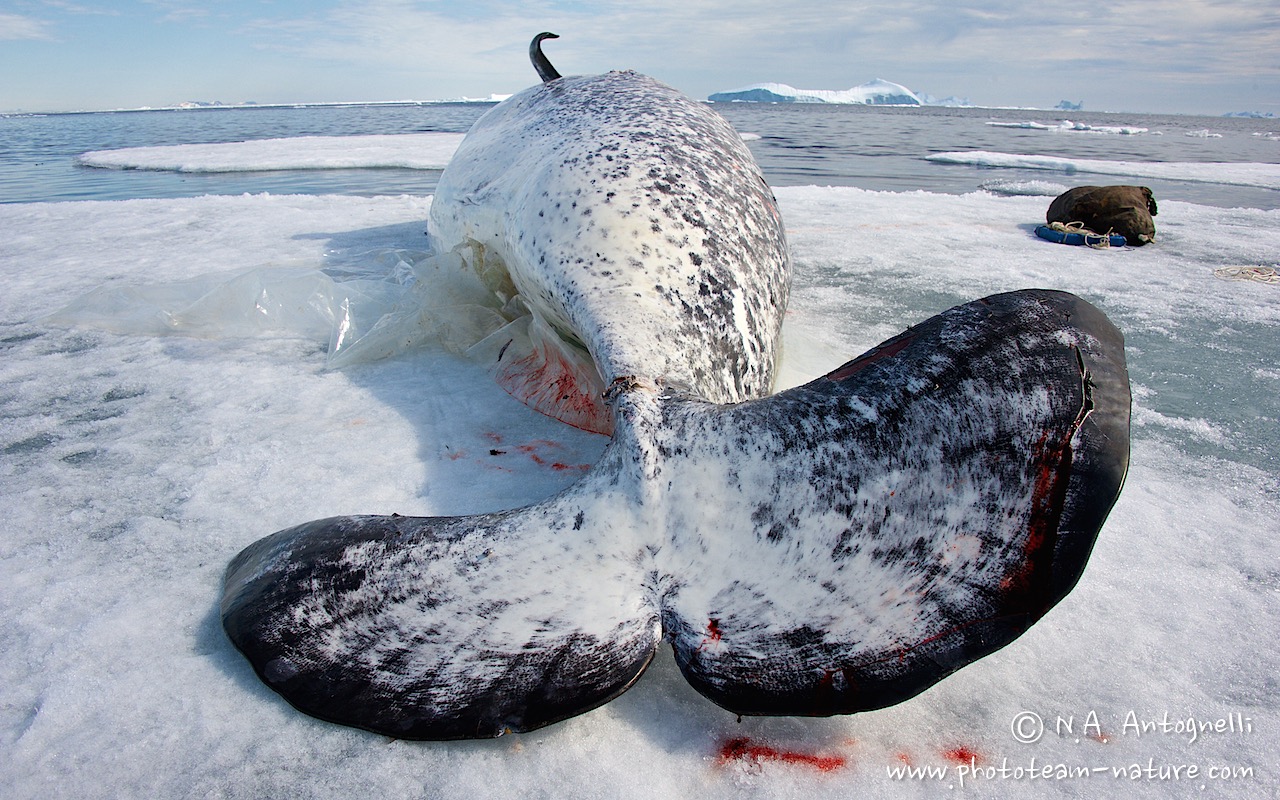
Given the limited opportunities, hunting
represents a minor activity. Our hunters have been obliged
to help the biologists to study the narwhals. There are
certainly possible openings with tourism, but we are sadly
lacking in knowledge on this subject. Many whales pass by
our coast. They are in fact increasing in numbers, except
for the belugas, which have disappeared. We don’t know the
reason for this, but it is clear that something has changed,
and that their habits have been modified. |